 Yeah, so I think from a Crocs perspective, you know, we’re a global brand, and we’re really – our DNA is really based on a classic clog. When you ask people around the world, we have very, very high recognition and awareness. People really, everybody knows Crocs, and everybody thinks about Crocs as our classic clock. Yeah, absolutely, associated with the clock, and so for many years we were really focused on driving the relevance of the classic clog. For me. So our job was to make it cool, or you know, for people to think about it for them. So we’ve spent, you know, many years doing that, probably started repositioning the brand in 2015 and now you know, have had, you know, I think eight or nine consecutive years of growth from a crocs perspective globally, and so in, in 2010 actually, we started producing sandals, but in the more recent past, you know, the last three to four years, we really thought, okay, so we need to, you know, we have a right to play in other silhouettes. What makes sense for us, and how do we think about diversifying outside of our clog business? And when we were listening to consumers and how they use the classic clog, and how they think about it, right, a lot of consumers think about it, a summer beach, water, you know, very similar to how people think about sandals, and we noticed in our consumer listening that actually our consumers thought we had a really high right to play from a sandals perspective, and it came through the data that people actually really wanted Croc sandals, and then we started looking at the sandal market, and it’s highly fragmented, there’s not one kind of brand that dominates it, and we thought, okay, this is a market where we can really provide some innovation and provide our consumers with a really compelling proposition. So we set out to develop a really great sandal business with kind of some really compelling friend sandal franchises in our DNA.
Something where our DNA really translates, right? So we’re molded as really compelling as we think about cross a light, which is, you know, our proprietary materials that we use in classic, and gives it that cushy, soft feel. Can you know, we can definitely bring that to sandals, wearing occasions, and then you know our ability to personalize, which is really kind of how we set ourselves outside of comfort and really compelling price points. I would say personalization is kind of the third leg of how we really set ourselves apart in the mind of our consumers.
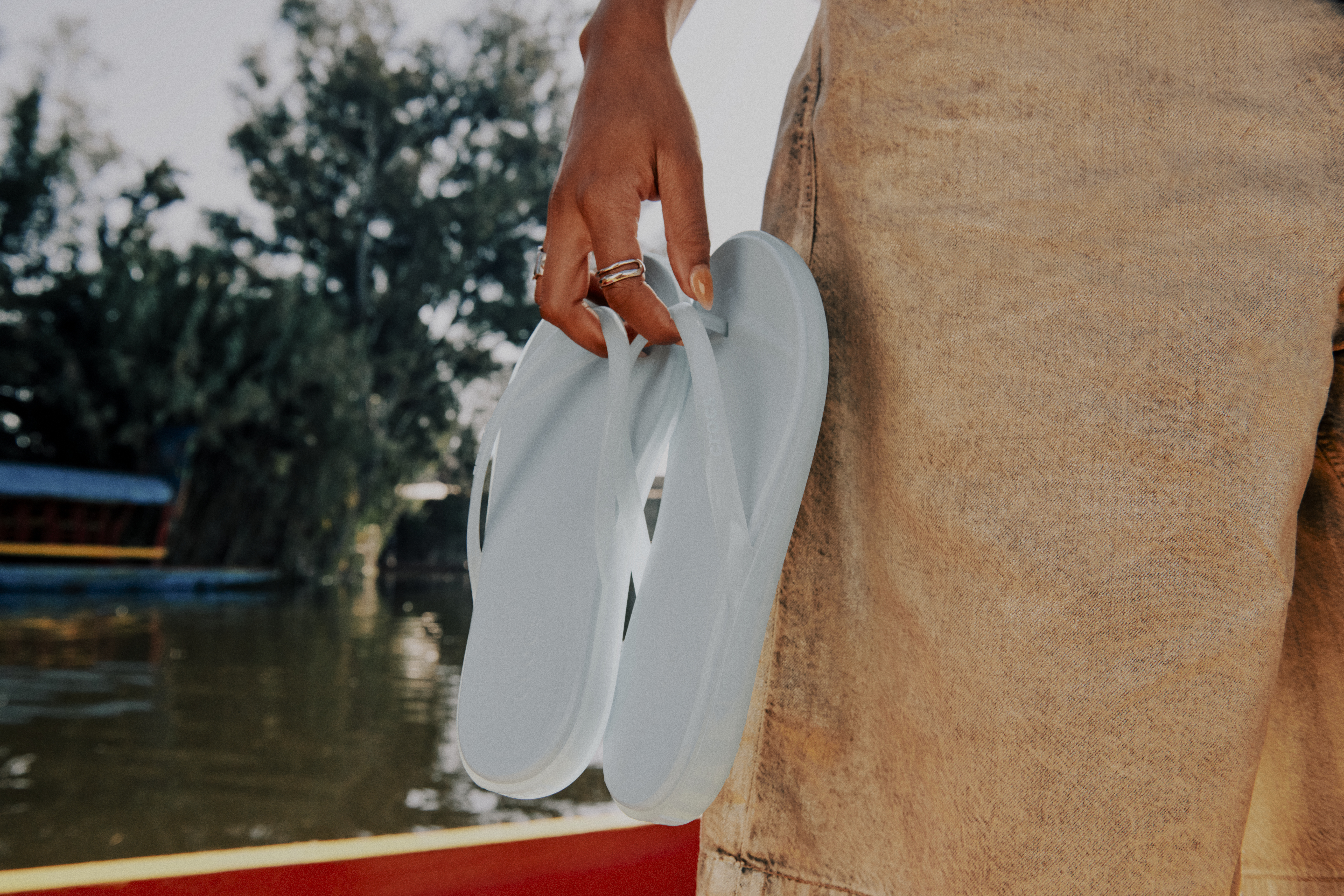
Yeah, so I would say first we put a really big ambitious goal out there and said, hey, we think this is a real business, we want to be, you know, a top standalone company, so you know, first we went and hired kind of the best sandal team we could find if we were a sandal business, so that’s been great. And then we kind of thought about sandals from a wear occasion perspective, and said, okay, let’s kind of, where there’s, we kind of think about it in four areas, sort of every day, which, you know, is like flip flop, or you know, a slide fashion or style, which is a little bit more, you know, it may have a heel, it may just lean a little bit more stylistically of where you would wear it, adventure, so we’re not going to make, you know, true adventure sandals, but you know, a nod to adventure might be a little bit more river outdoor, and then sport, you know, like a slide, you know, on and off, pre and post. So we set out those four wearing occasions, and we developed three really compelling sandal franchises. So the Getaway, the Miami, and Brooklyn are kind of three of our big powerhouse sandal franchises, and we laid that on some existing franchises that have been great for many years, like our crop band flip, which is just a very, you know, basic flip that our consumers love for, you know, value and comfort. So we developed those franchises, and last year we saw really good growth from a sandal franchise perspective. And then this year we, we, I think we ended last year around four $50 million which puts us as really a top sandal brand. And this year we have ambitions to be to hit the half a billion dollar mark, which would be double digit growth from last year.
Yeah, so I think sandals represent approximately, I think, last year around 13% okay, of our overall revenue. So still, we’re still, you know, the clogs are still clogs are still a huge piece of our DNA, and by no means are we walking away from that. No, no, definitely outgrowing clogs, just from a perspective of, you know, it’s newer. We’ve provided a lot of innovation, and when I, the way I think about it, is it actually gives some of our loyal consumers another reason to purchase. Yeah, and it actually, what we see with sandals, is it brings a lot of new consumers into the brand, and then they get, you know, acquainted with the brand, and they’ll come in on a sandals purchase, and then buy something else.
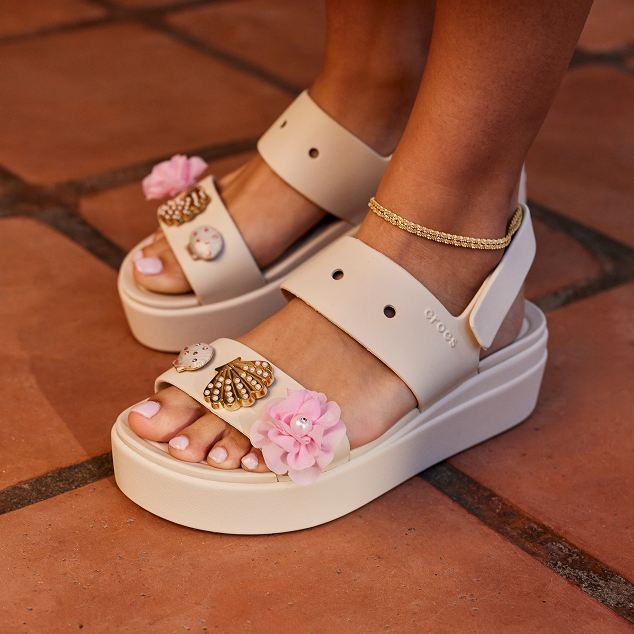
Yeah, so we obviously have our traditional personalization in our gibbets, right? People are familiar with that kind of pop into the hole. So we’ve just introduced a fourth sandal franchise this year, which is really compelling, which is called the Saturday franchise, and it’s a two strap and a slide, and it has gibbet holes, so you can personalize it. It has kind of fashion right details with buckles. Our metallic buckle is doing really, really well, but you can really personalize it and make it your own. And then, in the last month, we’ve actually introduced sandal charms, so they’re specific to, they’ll fit on, you know, our Miami franchise, which is one of our best-selling franchises, especially it has, you know a flip and a two strap, and so it had these you can clip on to your sandal and embellish your sandals. So we started testing those online and in some of our top retail stores, and have had amazing success on that. So we’re planning on expanding that,
Yeah, so we haven’t put it is an interesting question, because we have a very democratic consumer base, which we target men’s, women’s, and kids all across the spectrum. You know, I would say our product is really accessible, but when we think through sandals, we are thinking we do kind of target across the spectrum, and it really right, we really started the sandal focus with focus on she, because she is the number one sandal buyer. She’s going to buy multiple times. She’s going to fill her closet with multiple sandals, and then we will add. And now we’re working on kind of a good men’s proposition, but we really started with her. And then what we started to see is that a lot of our sandals started to go viral on TikTok, which we have been an early adopter on, especially our Miami franchise, which tends to lean a little bit younger, and that that consumer is definitely younger than our overall consumer, and we over index there with new consumers. So, I think about half of all of our TikTok consumers in the US are new to the brand.
Yeah, I guess the kind of personalization and the kind of fun you can have with it, does lend itself, obviously not exclusively, but obviously it lends itself to a younger customer. In terms of how you distribute now, I mean, what in terms of the split between selling through other vendors, having stores, and how you view those, the showcases. Now, what’s the how does it work?
Yeah, so we have a pretty even split between direct to consumer, which you know includes digital and physical owned retail, and our wholesale business, which could be multi brand or or distributor business. So it’s a pretty good, it’s a pretty even split, I would say, you know, within our digital kind of, we caught, we talked about ourselves as kind of a digital first company, meaning we really try to lean into kind of, you know, digital marketing as well as being first on, you know, digital platforms. So, for example, we were early on TikTok around the world, Doyen in China, and you know, we have our own.com we sell on popular big marketplaces across the world, like Zalando or Amazon, and then we have our own retail stores. Yeah, so both outline outland full price. In fact, we just opened a new full price store in Stratford, and in the UK. Okay, yeah, which is a really nice expression of our brand. So we started really with outlet stores, and then just a few kind of key and key markets and full-priced stores as well, that really highlight the brand, but physical retail is really important for us, because it is the best place for the consumer to experience our personalization. Haven’t quite been able to recreate that experience online yet of the consumer going in, and if you go into one of our stores, like in Stratford, and you watch the personalization bar, the consumer just loves to, you know, be at that bar, and they’re actually looking for shoes to personalize, right, and to charms. The Stratford store manager was telling me when I was in London a few three weeks ago, saying, you know, people come in and they’re looking for shoes, so that they can add terms to them or gibbets to them, and so that’s the importance of physical retail, kind of really creates that emotional connection with the consumer, obviously highlighted by our, you know, top retail associates, which are amazing, but and that experience for personalization,
I guess, as well, I mean, you know, when I think of, you know, like the kind of the breakout of Crocs in the early, I’m old enough to remember that is, you know, I mean, I mean, the stores were born because of the, you know, the visual merchandise in the very vibrant colors, that’s really why everyone kind of was drawn to Crocs, because that whole physical kind of experience of seeing them all in one place, a bit like maybe Swatch, you know, would be another example back in the day with the very, you know, bright and kind of price-accessible watches, so yeah, it’s interesting, you know, like exactly, and you know, they obviously went to joke, like, if we can just get classics on people’s feet, yeah, sandals, once you put them on your feet, it’s a totally different experience. So, obviously, we love the physical part, because we can tell our own brand story, and we can get, you know, shoes on people’s feet once they try them on, it’s hard to hard to say no,
Yeah, so we have six key markets outside of the US, we have five, and those in Europe is kind of, we call it Western Europe, but it’s really UK, France, and Germany. Okay. And then we have outside of Europe, we have China, Japan, South Korea, and India. Okay. So that’s kind of how we think about our key markets. And, obviously, you know, from a sandals perspective, there are some markets where, you know, for Europe, for example, you need the sun to shine, yeah, to sell some sandals, right? People want to see the sun may take a little longer than we wanted to, yeah, but it’s still really key growth, growth driver in that market. But I would say, and then there’s natural kind of markets where it’s hot year round, Southeast Asia, India, which India is a really key market for us, because one, it has sandals as a natural silhouette for, you know, India consumers. They’re used to, you know, that sandals – they live in sandals, so that’s great. Yeah, and it’s hot there year round, and our brand is strong there. So, I would say we sort of focus on everywhere, but it is helpful when you have warm weather markets year around. And then we can kind of cap that off with great selling seasons in Europe, in the US, where it may not be as warm.
interesting? And I joke about this a little bit, because our, you know, all around the world everybody says, like, we’re so we’re different, right? But really, like 80% is the same from a sandal, from a shoe, perspective, but so I would say our top-selling franchises are pretty much our top-selling franchises everywhere, there are a couple local nuances in Asia, they like a little bit more height, so we tend to sell more height, especially in China, and some, so they tend to, and some of the silhouettes are a little more, I would say, fashion forward. Okay, that you know, and so that’s like a little bit of the nuance, nuance versus kind of more Western,
Yeah, so I’m very, very excited about the Samuels from Switch. We were just introduced, very elevated. They’re really lovely. You can put them on our sandals, you can actually put them on anybody’s sandals. Okay, want to buy another sandal, you can add them. So, I think that’s a really fun proposition from us. Also, we have some really exciting new intros next year. We have a gibbetable flip, which I’m pretty excited about, which is called the Rio, which you know leans heavy into our DNA of Gibbetable. It’s bright. We have a height option on that, especially for Asia, so and then you know we’re really weaving into kind of different our Saturday franchise, which we kind of just came to market with this year, and we haven’t been able to keep it in stock, so I’m excited to scale that franchise and really lean into that next year, and then yeah, and then we have some really exciting new intros out of our Miami franchise, we’ll just continue to build on that kind of more fashion-forward franchise.
One other thing I’m pretty excited about is, you know, I think, and you know, UK, and every market around the world, a lot of times people will wear our classic for pre and post sport, but how do we also, some people don’t want to wear a classic for pre and post sport, so we’re introducing a really fun recovery slide targeted directly at pre and post sport for our athletes, so I’m pretty excited about that as well, from a sandal perspective, and just finally on the younger consumer, you know, I guess I mean, you know, I like to say, I mean, I kind of remember the original Crocs and the things, and when I think of that, I probably immediately am drawn back to those first very distinctive stores with the younger consumer, I guess you’re probably connecting first with them through digital. Are you seeing much difference between them and how they come to how they come to you? And I guess also you are playing into the authenticity, which the Zeds and even the A’s, we need to start talking about now. I guess they’re all very into, aren’t they?
Yeah, you know what is interesting is that a lot of older consumers find Crocs still weird to put a croc on their foot, right? They can grow up with it. A lot of them was their horseshoe, right, the natural shoe clean. And so what we’ve seen is the kids have grown up in Alpha and Z are much more connecting CMO says we have less than about how do we really talk to them where they are, so on digital platforms, on social platforms, on TikTok, but also I think give them a reason, you know, an immersive experience to come to the store with personalization. They don’t crave, I think, that physical interaction as so much of their life has become digital.
Most of our stores, I would say the vast majority of our stores are really outlet focused, so really outlet malls, and then I would say the ones that are not in outlet malls, and this is kind of west, and then I’ll talk east, so yeah, sure, yeah, in America, and then I would say the rest malls, so where we do have full-priced stores, we don’t do a ton of high street, it’s mostly malls.
Yeah, and then I think you know in Asia, it’s a little bit of both, because it’s different. There’s malls, there is some, you know, some high street in Asia, and they tend to, our Asian stores tend to also be, you know, full price and outlet, so a little bit of a nuance there.